Hey Risers
Thank you for being part of India Rising. It’s great to have you here.
It’s time for our next special issue: a guest article by Kunal Singla on why India is Europe’s next growth anchor.
Learned something? Help someone else and share India Rising with your friends, family and co-workers. Let’s grow our community together and thank you for supporting the Indo-European partnership.
Got feedback? Just hit reply, I’d love to hear from you!
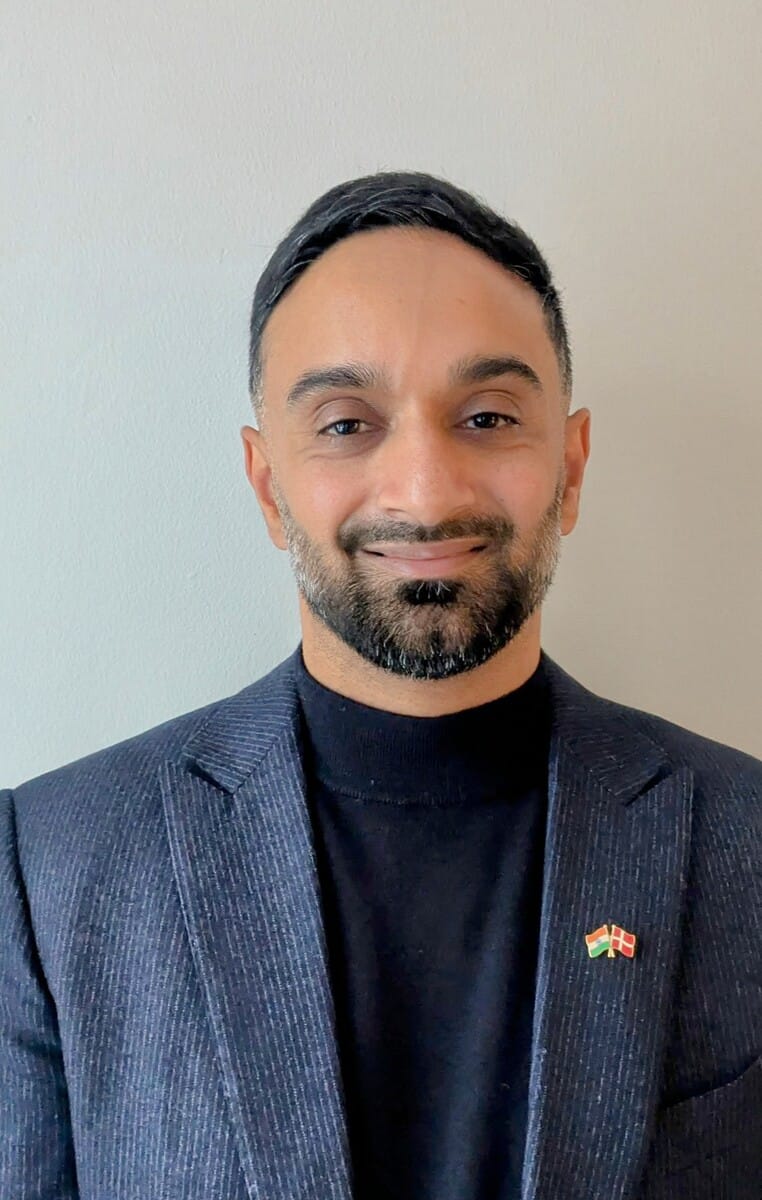
The author of today’s guest article is our fellow Riser Kunal Singla, who is based out of Copenhagen, Denmark.

Guest Author - Special Issue “India is Europe's Next Growth Anchor”
Kunal is founder of COBO Consult, a Danish niche specialist in Nordic-India business bridgebuilding. With a strong entrepreneurial background and long-standing expertise, Indian-Danish Kunal bridges insights and hands-on experience from both Europe and India. With a former experience as Director of Danish Industries’ office in Mumbai, India, Kunal converts the geopolitical opportunities opening up in India into clear business strategy and robust execution for Nordic and European companies in India.
Enjoy the guest article!
The Risers’ Choice
Kunal is recommending a number of articles and interviews related to the EU-India Free Trade Agreement:
“Questions and answers on the EU-India Free Trade Agreement” by the European Commission
“What's in the India-EU trade deal?” by FRANCE 24 English
Signed, Sealed, Delivered. The Politicians have delivered ‘The Mother of all Deals’. Now European Businesses have to seize this Historic Opportunity
By Kunal Singla
After nearly two decades of negotiation, recalibration, and persistence, the EU–India Free Trade Agreement is done. To echo Stevie Wonder’s Signed, Sealed, Delivered, I'm Yours, the deal has been signed, sealed, and politically delivered (with final ratification pending), with rare alignment across governments and strong endorsement from business on both sides.
What determines outcomes from here is not celebration or velocity alone. It is how deeply companies prepare, how consistently they execute, and whether India is treated as an organisational priority and ‘must-win battle’ for the future rather than a peripheral market.
Trade agreements open doors. Well prepared companies walk through them effectively.
From Treaty to Traction
The political foundation is unprecedented for Europe and for India. European Commission President Ursula von der Leyen has positioned the agreement as central to Europe’s long-term growth and resilience, while India’s Prime Minister Narendra Modi and Commerce and Industry Minister Piyush Goyal underscored its balance, ambition, and alignment with India’s development trajectory and global ambitions.
That alignment creates geopolitical and commercial predictability, and predictability enables planning. But planning only turns into results when companies elevate India from a fringe far-away market to a cross-functional, leadership-level priority.
The firms that succeed will not be those that simply “enter” India under improved trade terms. They will be the ones that embed India into strategy, operations, talent models, and decision-making.
Be Aware and Prepare
How do we make this preparation more hands-on for companies and boards? Start with understanding the free trade agreement’s mechanics (once the final text is made public): tariffs, rules of origin, regulatory cooperation, services access, investment provisions, sustainability commitments, and phase-out and transition timelines. These details matter a lot, as the ‘devil is in the details’.
However, what differentiates winners is whether preparation is treated as a one-off compliance exercise or as a strategic capability that connects trade policy to sourcing, manufacturing, R&D, pricing, distribution, and capital allocation.
In practice, this means aligning headquarters, relevant functions/regional leadership (and Indian teams) around a shared view of what India represents for the company, and what ambitions the company has for India. Both ways. Today and five to ten years out.
Enabling Execution in India
India rewards execution excellence and smart localized business models and stakeholder involvement.
Commercial success depends on how well companies integrate Indian realities into their operating models. Market positioning must reflect India’s diversity across income levels, regions, and buyer sophistication. Go-to-market strategies hinge on distribution choices, partner ecosystems, and last-mile control. Pricing and financing models often need to be redesigned to show ROI clearly rather than relying on premium positioning alone.
Local sourcing is increasingly strategic, not optional. Supplier development, quality upgrading, and long-term partnerships frequently determine cost competitiveness and resilience. Competition must be assessed against Indian incumbents and challengers with very different economics and speed.
None of this can be managed effectively from the margins of an organisation. It requires empowered local leadership, fast decision loops, and clear accountability across functions — from procurement and compliance to sales, product, and finance.
Execution in India is therefore less about market size and big numbers alone, and more about organisational coherence.
Integrate, Don't Delegate: Nordic Case Studies
The Nordic region has historically been underinvested in India as a whole, but this trend is changing rapidly. Denmark, for example, has more than 225 companies in India, providing employment for more than 200.000 employees across the country.
Here are three examples of Nordic companies that illustrate how preparation and execution succeed when India is fully integrated into corporate strategy:
Novo Nordisk from Denmark has treated India not as an “emerging market unit” but as a long-term strategic pillar. Deep local presence, investment in talent for global operations and partnerships, as well as an alignment with India’s public-health priorities in diabetes care have embedded India into the company’s global mission and operating model, with Indians also being the one of the largest nationalities in the headquarter in Copenhagen. India is simultaneously a market, a knowledge ecosystem, a talent hub, and a strategic contributor.
IKEA from Sweden demonstrates how integration reshapes retail and supply chains. Rather than replicating a global format, IKEA adapted products, pricing, logistics, sourcing, and digital channels to Indian living patterns and consumer behaviour. India functions both as a consumer market and as part of IKEA’s global sourcing ecosystem, a result of deliberate organisational commitment, and continuous learning and tweaking.
Yara from Norway shows how industrial firms integrate into India’s core economic priorities. Long-standing engagement in fertilisers, crop nutrition, and sustainability solutions reflects alignment with India’s food security and environmental objectives. Yara’s model underscores that in India, execution often means working alongside policy goals and engaging actively on grassroot levels, and embedding that reality into corporate strategy.
Across sectors, the common thread is clear: India works when it is integrated, not delegated.
Assess India 360 Degrees of Value Creation
The EU-India agreement also accelerates India’s role beyond sales alone.
American giant firms such as Google and Microsoft have already embedded India into their global operating systems, as hubs for digital infrastructure, AI deployment, engineering talent, and innovation ecosystems. These are not side projects; they are core nodes in global strategy. Recent multi billion dollar investments underline that.
European companies now have the same opportunity in a European way. But only if organisational structures allow India to function as a phased web of
A large and growing market, no matter your niche
A de-risked production and export base
A talent hub for engineering and R&D
A source of digital and operational talent through Global Capability Centres
A platform for co-developing products for global and third-country markets
In other words, many of the most pressing agendas in boards and companies across Europe. This requires integration across supply chain, technology, HR, finance, and strategy — not small India pilot projects in silos.
Lean into the India Opportunity
This agreement is historic. But history will not be made by those who merely react to it. Longterm, robust, and scalable success will belong to companies that:
Prepare seriously and early
Execute with local insight and discipline
Integrate India into the heart of their organisation
Apply continuous learnings from the ground
Novo Nordisk, IKEA and Yara are just three out of many European companies who have approached India in a phased and holistic strategic approach. This historic EU-India free trade agreement lowers the barriers and paves the way for many more to follow, not least the many ambitious European SMEs.
The Danish shipping legend Maersk McKinnet Møller coined a famous evergreen phrase that loosely translates to ‘No loss or missed opportunity should befall us that can be avoided by acting prudently and timely’. Now it's time for boards and management of companies all over Europe to act prudently and timely by preparing and investing in their India preparedness and opportunities.
The deal is signed and sealed.
The opportunity is real.
The decisive factor is whether companies understand Mr. Møller’s wisdom and seize a historic moment and grasp and grab the India opportunity.
At COBO, we believe that they can, and we are here to help make it real.
Sources: Novo Nordisk, IKEA, Yara, COBO Consult
Contact the Author
For further information, please contact the author via LinkedIn or the COBO Consult company homepage.
How did today's guest article resonate with you?
Enjoyed this issue? Share India Rising with your network.
Whenever you’re ready, here are 3 ways I can help you:
1. Real Estate Services
Whether you're optimising a corporate real estate portfolio, leading a development project, or plan a transaction, I can help you. I support and advise clients on a fractional, interim, or project basis to de-risk and deliver tangible results.
2. Market Entry India & Emerging Markets
As Strategic Advisor to Zinnov, a leading consultancy for globalisation in Tech, I help you set up your organisation’s GCC in India and Emerging Markets.
3. Collaborations & Promotions
I’m a proponent of ecosystems and partnership networks. Whether it’s collaborating on a project, participating in your event or promoting ideas: just reply to this email.
You can’t get enough or want to catch up on past editions? Follow the link!
